To Fast & Feast Well
- Jul 8, 2025
- 7 min read
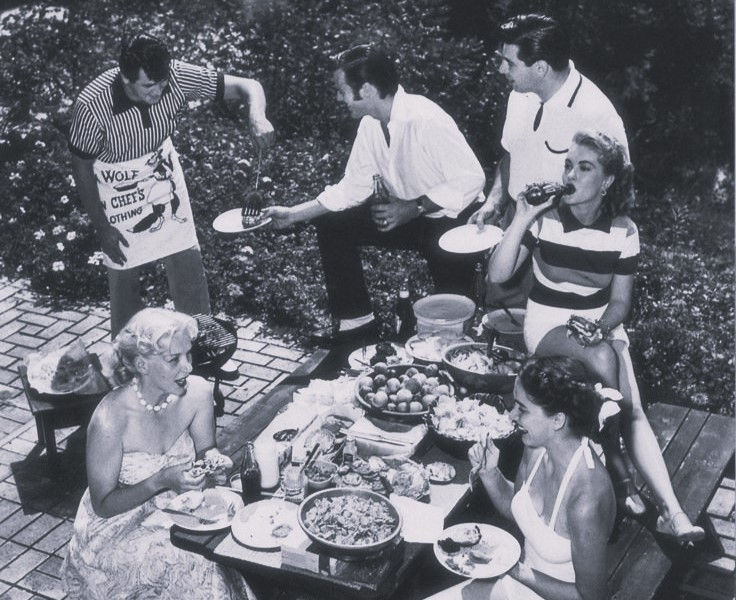
A struggle which many of us have in the West is saying no to the things we should not do, as well as saying yes to those things which we should do. It is not so simple as some may think of practicing self-denial - yes this is something we must do, but we forget that to be virtuous it does not simply mean rejecting the bad, but also embracing the good. I believe this is something we should be reflecting on in this moment in time most especially since we are in a year of Jubilee in our Church. In this year of celebration and joy, we should be attentive to celebrating well.
Look at Matthew 12:43-45 with me for a moment. Christ says here that after a demon has been cast out of a man the spirit wanders, then returns back to his old home where he possessed the man with seven more spirits and he "it finds it empty, swept, and put in order." Scholars of the Greek have said that the original words are getter translated to say that the demons find it "empty, swept, and ornate." This is to say that this "home" of theirs, which is the heart, soul, and body of the man, is decorated; he has made his heart beautiful and clean since the demon was driven out, but it is void, empty, failing to fill the void with the space left by the demon. Because nothing has been brought in to fill the void it is easy for the previous resident and friends to reoccupy the space. Why wouldn't they? There is nothing there to stop them. There is no one taking up that space who could keep them from coming in - such as Christ could, were He to take up residence within the heart of this man.
Here is the point I have been working towards. You deprive yourself of a good, as you should, through fasting and abstinence. The Church asks this of you, and you oblige, because it is commanded by Christ when He said "when you fast" with the expectation you would do so. But after you empty yourself, what do you fill yourself back up with? Yes the correct answer according to the Church is "I fill myself up with Christ" but that is the spiritual sense of things - what about the physical? Fasting is a physical act with spiritual implications, and so after the fasting is finished and it is time to fill yourself up again, what are the physical and spiritual things you fill yourself up with? Friday is a day of fasting, and it is followed soon after by Sunday which is a day of feasting - there is a greater purpose behind this.
This - the relationship between, and necessity of, both fasting and feasting - is in fact the true purpose of this article. I want to draw attention to the fact that we in the West do not fast or feast well. Many of us do not do well in depriving ourselves, but those who do will often fail to feast as they should. Tell me, after the forty days of Lent, what follows? Easter! Fifty days of it! Fifty days of feasting, preceded by forty days of fasting. Each Friday in the year is a day of abstinence - a type of fast - and each Sunday in the year is a day of feasting.
In regards to fasting I do not wish to dwell on the quantity of it, though I think that should be discussed. No, rather the quality is what I want to speak on. This fasting which we engage in today, it often ends up being either pathetic or masochistic much of the time. I know plenty of people who test to see how far they can push themselves each Lenten season, as if this is a time to test your furthest limits. Yes they suffer, but fasting is not about suffering. Fasting is about depriving yourself of something which is good. Fasting is the removing or limiting of your enjoyment of a thing so that whatever part of yourself you would dedicate to that good thing is instead given up to draw you nearer to God. Let me say that again but shorter - fasting is not to incur pain, it is offering up the joy which you would have had to God.
Fasting and feasting well are correlations with how much you care for yourself, and how much you love God. How well are you treating yourself? If you cannot deprive things from yourself, how well can you rid yourself of those things which draw you away from God? If you cannot enjoy well the things which are good, how well can you enjoy goodness itself, God? To say "no" to a thing makes your "yes" have weight to it because the "yes" is not flippantly given - and your "no" has meaning only when your "yes" has meaning. These things are linked to each other.
I heard a priest at the beginning of this past Easter season say "Feasting can be tiring. It requires time, and effort, and it costs money. It can be uncomfortable. But we should all do it." These times when the Church prescribes feasting, we should feast.
But what do I mean when I say that we do not feast well? As one example, we fast when we should feast. Did you know that it is wrong to fast during the season of Easter? I do not mean that it is a sin to fast, but it is not what you are supposed to be doing. "How can the guests of the bridegroom fast while he is with them? They cannot, so long as they have him with them." It has been the tradition of the Church since basically the beginning to fast and abstain on Fridays except for when a feast is going on. If a Solemnity falls on a Friday, or if it is during a season of feasting, then there is no obligation to fast since the feast supersedes the fast.
This quote I will share is from the Sacred Congregation of Divine Worship (a delegation from the Vatican) and their document General Norms for the Liturgical Year and the Calendar the Church. The Church sees all the days of the Easter Season as one feast, one celebration: "The fifty days from Easter Sunday to Pentecost are celebrated in joyful exultation as one feast day, or better as one 'great Sunday'." It is very good that you engage well in your abstinences and fasting during Lent (which I hope you do engage in), but are you celebrating well in Easter? Fridays remain mini penitential days even during Easter, but I want you to answer me on this, how well are you feasting during our Great Feast?
How well do you feast? Do you eat more than you normally would? Do you watch another episode of that TV show you like? If this is what you call feasting then you haven't a clue what it truly means to feast. Each feast day of the Church is a celebration of the wedding of God to His people, and so we should live this reality out. If what you call feasting is actually indistinguishable to others from a normal day, I would humbly suggest that you are not feasting correctly. I am not telling you to stuff yourself, drink a whole bottle of wine, or binge an entire TV season, more that you should learn to celebrate well. We are told as Christians to be in the world but not of it, and this means to abstain from the things which pull us away from God - but would it not follow that you should celebrate well in the things which are gifts from God?
We do not engage well in either feasting or fasting. We often either overdo it, or we halfheartedly engage. Americans don't feast, we indulge. We don't celebrate, we satiate. We stuff ourselves and seek comfort rather than rest. Neither do we fast, we avoid. We don't abstain, we abdicate our ability to choose. Rather than choosing to not enjoy a good thing, we avoid the ability to choose that good thing altogether. Instead of learning discipline we cast into a place where we do not have to choose. We avoid discomfort by hiding - rather than saying "no", we make it so we cannot say "yes". Recall that your "no" is only as good as your "yes" is, and your "yes" is only as good as your "no" is.
I am being somewhat vague in what I write. I have not been very specific in some of what I have said because I do not believe there is one simple solution to this issue. To propose a solution to this issue which we find ourselves to be in the West would have to address society, and I won't do that. I believe there is a societal aspect to this, but this is a problem of individuals. If we address the external (societal) that misses the internal (personal) failures, which is where the issue presides. There is an argument to be made that we as a Catholic society need to work together on this, but I fear that by making this a "we" problem we will forget that to fix this we must start with ourselves.
So what do we do? What is the answer to this conundrum? What is "the solution"? Simply put, be intentional. Don't look to others and see how they fast, don't look to the examples of those around you for what you should do, but listen to the Lord to hear what He is asking for you to grow in. Of course if you are still working to develop your ability to obey and hear the voice of God then looking to those around you is a start, but that is not where you should remain.
And for feasting, celebrate well. When it is a time for feasting, others should know that you are in a celebration. Not in the garish and flamboyant displays some do for their birthday or as their last hurrah before marriage, but they should see joy expressed through your demeanor and in what you are doing. While fasting should be a humble act, when you feast it should be clear to others the joy of God which you possess. Hide your fast, herald your feast.
I often mention food as my examples in this article, and that is because this is what people most often think of in regards to feasting and fasting. But I use these words to mean not just food, but that in all ways we should engage well in feasting and fasting. Cease the satiation, participate in celebration. Stop abdicating, start abstaining. In what the Lord puts before you be engaged, be enriched, be changed.
Written for VME Catholic, by Ethan Hall


Comments